

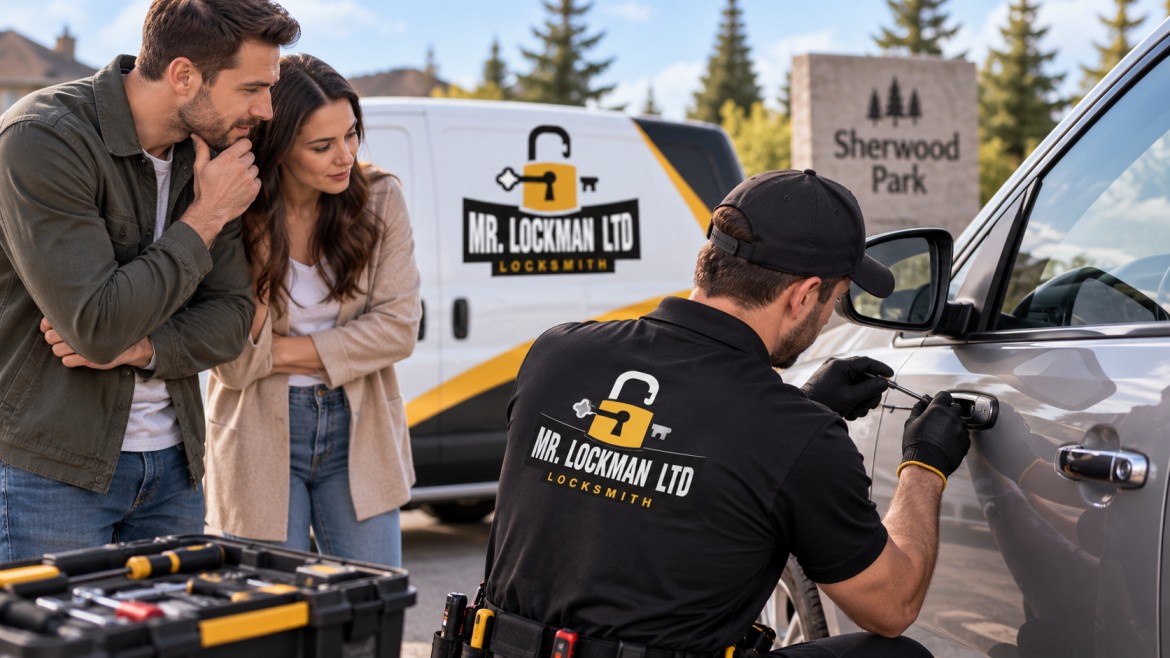
Getting locked out of your vehicle can happen in seconds. The keys may be sitting on the driver’s seat, trapped inside a locked boot, lost somewhere between errands, or damaged after years of daily use. When you are standing beside your vehicle and cannot get inside, knowing what to do next matters more than trying to solve the problem yourself.
A car locksmith in Sherwood Park approaches an emergency lockout differently from a simple key-copying job. The priority is to establish safe access to the vehicle without causing unnecessary damage. From there, the locksmith determines whether the existing key can be recovered, repaired, or programmed, or whether a replacement is required.
Modern vehicles have also made automotive lockouts more technical. Many cars now use transponder keys, remote fobs, proximity systems and electronic immobilisers. That means gaining physical entry is only part of the solution.
This guide explains what happens during an emergency vehicle lockout, how a mobile locksmith approaches the job, when key replacement becomes necessary, and what vehicle owners can do to avoid making the situation worse.
An emergency automotive locksmith normally starts by understanding the exact situation rather than immediately attempting to unlock the vehicle.
A driver might say, “My keys are locked inside,” but there can be several different scenarios behind that statement.
For example:
These details affect the appropriate solution.
A professional Car Locksmith considers the vehicle’s make, model, year, locking system, and circumstances before selecting an entry method. This helps minimise the possibility of damage to weather seals, trim, windows, locks or electronic components.
The goal is not simply to open the door. The goal is to restore safe and practical access while protecting the vehicle.
It can be tempting to search for a quick DIY method when keys are locked inside. Unfortunately, improvised techniques can turn a relatively straightforward lockout into a more expensive repair.
Using metal objects around a window, forcing a door, manipulating the locking mechanism incorrectly, or attempting to pull a door open can damage components that were never designed for that type of pressure.
A professional vehicle entry process takes the vehicle’s construction into account.
This is particularly important with newer vehicles, where door mechanisms may incorporate:
A trained locksmith uses appropriate equipment and procedures for the vehicle rather than relying on excessive force.
Providing accurate information before the locksmith arrives can make the response more efficient.
Useful details include:
You may also need to provide information that helps establish that you are authorised to access the vehicle. A legitimate locksmith should take ownership or authorisation seriously.
A Mobile Locksmith brings the necessary equipment directly to the vehicle rather than requiring the owner to transport the car to a workshop.
This is particularly useful when the vehicle cannot be driven.
Imagine a driver finishing work in Sherwood Park and discovering that the car keys are sitting inside the locked vehicle. The car may be parked in a shopping centre, workplace car park, driveway or roadside location.
Instead of arranging towing simply to retrieve the keys, a mobile locksmith can assess the vehicle at its location.
The process generally involves several stages.
The locksmith first confirms the vehicle and assesses the situation.
They may inspect:
Once the situation is understood, the locksmith chooses a suitable method of emergency vehicle access.
The exact procedure depends heavily on the vehicle. There is no single unlocking technique that is appropriate for every car.
When the keys are inside the vehicle but the owner cannot access them, the primary objective is usually non-destructive entry.
This is different from replacing a lost key because the original key may still be perfectly functional.
A professional may therefore focus entirely on gaining access without unnecessarily replacing components.
Once the vehicle is opened, the owner can retrieve the key and continue using it.
This situation demonstrates why it is important not to assume that a new key is automatically required whenever someone is locked out.
Keyless entry has made everyday driving more convenient, but it has also changed the nature of some lockout situations.
Modern vehicles may use proximity systems that allow the driver to unlock or start the vehicle without physically inserting a traditional key.
A problem can occur when:
In these cases, the physical door lock may not tell the entire story.
A locksmith must determine whether the issue is simply vehicle access or whether the electronic key system also needs attention.
Losing car keys is different from locking them inside the vehicle.
If the keys are genuinely lost, opening the car only solves half the problem. You still need a working key that the vehicle recognises.
This is where Key Replacement becomes relevant.
Depending on the vehicle, replacement may involve producing a mechanical key, programming a transponder, configuring a remote fob, or dealing with a proximity key system.
The available options depend on the specific vehicle.
A locksmith first identifies the vehicle and determines what type of key system it uses.
The replacement process may involve:
The important distinction is between physical access and vehicle authorisation.
A key can potentially fit into a lock but still fail to start a vehicle if its electronic security system has not been correctly programmed.
A broken car key presents a different set of challenges.
For example, the key blade may snap while being turned, or the plastic housing around a remote may crack after repeated use.
If part of the key remains inside the lock, forcing it further can make extraction more difficult.
A locksmith may first assess whether the broken portion can be safely removed.
Afterward, the available repair or replacement options depend on the key design and vehicle.
A damaged remote can sometimes require a replacement housing, while a damaged or missing electronic component may require a replacement and programming procedure.
A good locksmith does not automatically recommend replacing everything.
The decision depends on the actual fault.
For example, if the key has simply suffered physical damage but its electronic components remain usable, repair may be possible. In another situation, a severely damaged key may be unreliable even if the vehicle can currently be started.
The locksmith may consider:
This assessment helps avoid paying for unnecessary work.
Although lockouts are often associated with lost keys, several other issues can prevent vehicle access or operation.
Common problems include:
Possible causes include:
A key that worked reliably for years can eventually become unreliable because mechanical components wear down and electronic components age.
The first possibility is often a depleted battery, but that is not always the explanation.
A fob may also stop functioning because of physical damage, internal component failure, or a problem requiring reprogramming.
A locksmith can assess whether the problem appears to be with the key itself or with the vehicle.
A calm response can make an emergency considerably easier to manage.
First, move yourself and passengers to a safe location if the vehicle is parked near traffic.
Then check whether:
If a child, vulnerable person or animal is locked inside a vehicle, particularly in dangerous weather conditions, treat the situation as an immediate safety emergency and contact emergency services where appropriate.
Online videos can make vehicle entry look surprisingly easy. In practice, the method shown may apply to an entirely different vehicle.
Modern doors contain components that can be damaged by incorrect tools or excessive pressure.
Potential consequences include:
The money saved by avoiding professional assistance can quickly disappear if the vehicle needs subsequent repairs.
Repeatedly forcing a damaged key can cause it to snap completely or worsen an existing lock problem.
If the key is already bent or visibly cracked, stop using it and have it assessed.
Breaking a vehicle window creates several additional problems.
There is the immediate risk of injury, followed by glass cleanup and window replacement. It can also expose the vehicle to weather and security risks.
Emergency vehicle access should generally focus on safer, non-destructive options where appropriate.
Price matters, especially during an emergency, but a very low quote can sometimes exclude important elements.
Before agreeing to work, clarify:
Clear communication reduces unpleasant surprises.
You cannot prevent every lockout, but several simple habits can reduce the inconvenience.
Consider keeping a spare key in a secure and appropriate location rather than somewhere obvious inside the vehicle.
You can also periodically inspect your key and remote for signs of wear.
Look for:
These can be warning signs that a key may need attention before it fails.
One practical lesson from automotive lockouts is that the obvious symptom is not always the underlying problem.
A driver might report, “My key doesn’t work.” The actual issue could be the remote battery, damaged key, vehicle lock, immobiliser, or another component.
Likewise, “I’m locked out” does not necessarily mean a replacement key is required.
The most sensible approach is to diagnose the situation first.
For owners in Sherwood Park, having the vehicle details and a clear description of the problem ready can help a car locksmith in Sherwood Park understand what equipment and approach may be appropriate.
It is also worth keeping records of the vehicle’s make, model, and year. If a replacement key is eventually required, these details are useful when discussing available options.
When selecting a locksmith, look beyond advertising claims.
A trustworthy professional should communicate clearly about the work involved and avoid promising a universal solution before seeing the vehicle.
Consider asking:
Good communication is especially important during an emergency because vehicle owners are often under pressure.
Car Key Replacement in Sherwood Park can mean different things depending on the vehicle and the nature of the problem.
For one driver, it may mean replacing a damaged traditional key. For another, it may involve a transponder key or remote fob. A newer vehicle may require a proximity key and electronic programming.
The correct solution therefore starts with vehicle identification and diagnosis.
If all keys have been lost, the locksmith may need to address both vehicle entry and the creation or programming of a new key. If the original key is simply locked inside, replacement may not be necessary at all.
That distinction can save time, money, and unnecessary work.
A vehicle lockout is stressful, but rushing can make it worse.
The safest approach is to secure yourself and your passengers first, avoid damaging the vehicle with improvised entry methods, and provide the locksmith with accurate information.
A professional car locksmith in Sherwood Park can then assess whether the situation requires vehicle entry, key extraction, key repair, programming, or Car Key Replacement in Sherwood Park.
The most important point is simple: do not treat every lockout as the same problem. The right solution depends on the vehicle, the key system, and what actually caused the loss of access.
An emergency lockout is more than an inconvenience when you are stranded away from home, late for work, or dealing with a vehicle that will not recognise its key. Understanding how the process works can help you make a better decision under pressure.
From non-destructive vehicle entry and broken key extraction to programming and key replacement, the correct solution starts with identifying the actual fault.
Whether the problem involves lost car keys, a broken car key, a damaged remote, or a straightforward car lockout, choosing an experienced car locksmith in Sherwood Park can help protect the vehicle while addressing the immediate access problem.
Most importantly, don’t force a damaged lock or experiment with methods that could turn a simple lockout into a vehicle repair. A careful diagnosis is usually the better starting point.
Move to a safe location first, particularly if the vehicle is parked near traffic. Check whether a spare key is available and avoid forcing the door or using improvised tools. A professional locksmith can assess the vehicle and determine an appropriate entry method without unnecessarily damaging the vehicle.
The time can vary considerably. A straightforward vehicle entry may be relatively quick, while a lost key, broken key or electronic security issue can require additional work. Vehicle make, model, location, and the type of locking system all influence the time required.
In many situations, an automotive locksmith can provide replacement-key solutions, but the available method depends on the vehicle. Modern cars may require electronic programming in addition to cutting a physical key. The locksmith will normally need vehicle details and appropriate proof that you are authorised to have the work completed.
Do not continue turning or forcing the broken key. Further pressure may push the broken section deeper into the lock or damage the mechanism. A locksmith can assess the situation and determine whether the broken section can be extracted safely before considering key repair or replacement.
Replacement may make more sense when the key is severely damaged, has been lost completely, repeatedly fails, or has electronic components that cannot be reliably repaired. The right choice depends on the key type, vehicle security system, and condition of the existing key. A proper assessment can prevent unnecessary replacement costs.