

Getting locked out can disrupt your entire day. You might be standing outside your home in freezing Edmonton weather, arriving at your business before opening time, or discovering that your car keys are locked inside the vehicle. In these moments, knowing what to do next can save time, reduce stress, and prevent unnecessary damage.
An emergency locksmith in Edmonton can help with urgent access problems, damaged locks, lost keys, and other unexpected situations. However, not every lockout requires the same solution. A house lockout may involve a faulty deadbolt, while a vehicle lockout could require specialised automotive tools. A business lockout may also involve access-control systems or restricted keys.
This guide explains what to do during different types of lockouts, how to choose a qualified professional, what affects emergency locksmith costs, and how to protect your property afterwards. Whether you need a 24 hour locksmith in Edmonton or simply want to prepare for a future emergency, these practical steps will help you make a safer, more informed decision.
Lockouts often occur during ordinary activities rather than major emergencies. A door closes behind you, a key breaks inside a cylinder, or a vehicle’s automatic locking system activates while the keys are still inside.
Edmonton’s changing weather can add another complication. Cold temperatures may affect door hardware, cause moisture around a lock to freeze, or make an existing mechanical problem more noticeable. However, cold weather is not always the cause; worn components, misaligned doors, and damaged keys can also be responsible.
Common reasons for calling an emergency locksmith include:
Understanding the cause helps determine whether you need a simple lockout service, a repair, a replacement, or a more specialised solution.
Before contacting a locksmith, take a moment to assess the situation. A few sensible steps can make the process safer and help the professional prepare for the job.
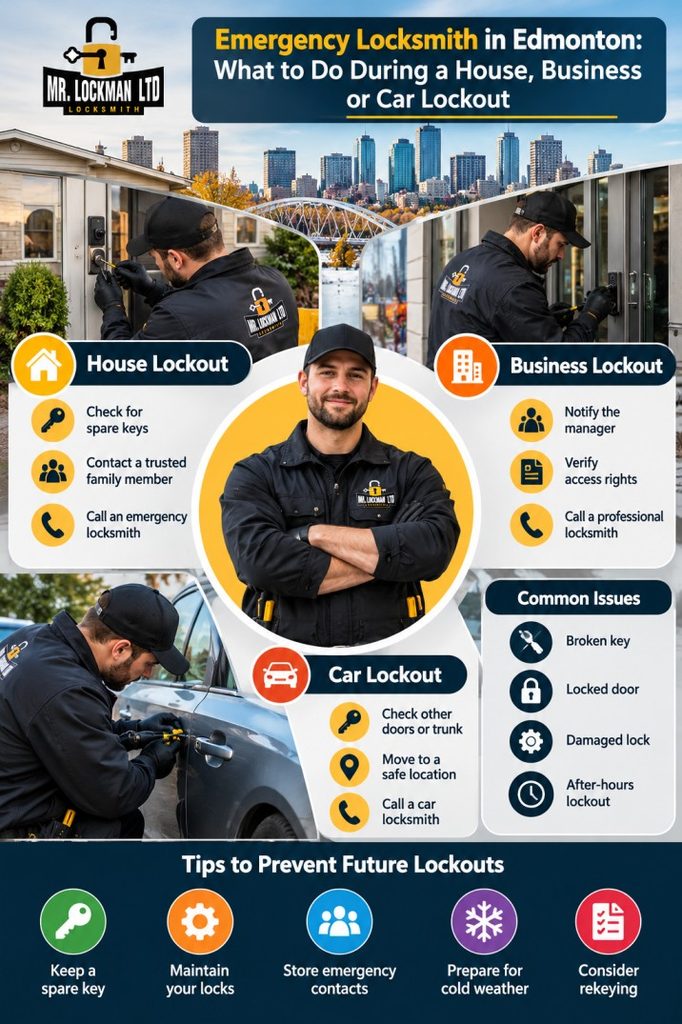
If you are locked out of your home, check whether another authorised entrance is available. You might have a spare key with a trusted family member or a building manager who can assist.
For a rental property, contact the landlord or property manager if they handle emergency access. For a commercial property, an authorised manager may have a backup key or access credential.
Avoid climbing through windows, forcing a door, or attempting to bypass a lock. These actions can cause injuries, damage property, or create additional security risks.
A routine lockout is inconvenient, but some situations require immediate emergency assistance.
For example, if a young child or vulnerable person is trapped inside, a stove has been left on, or a medical emergency is developing, contact emergency services when there is an immediate threat. Do not wait for a routine locksmith appointment if someone’s safety is at risk.
If you are stranded outdoors during severe cold, move to a safe, warm location while arranging help.
When calling a locksmith, explain what happened and what you can see. Useful details include:
Clear information helps the locksmith bring appropriate equipment and provide a more realistic estimate.
Do not assume that an advertised emergency service has an immediate technician available. Ask for an estimated arrival window and whether travel time, after-hours charges, parts, and labour are included in the quoted price.
A reputable provider should explain what is known before dispatch and clarify any additional charges that may arise after inspecting the lock.
A house lockout can happen at any time. You may step outside to collect a delivery, take out the rubbish, or leave for work, only to realise that your keys are still indoors.
A residential locksmith in Edmonton can assess the lock, confirm authorisation, and determine the least disruptive way to restore access.
Start by checking whether another household member has a key or whether an authorised property manager can help. If neither option is available, contact a qualified locksmith.
Tell the professional whether you have a standard keyed lock, a deadbolt, a smart lock, or a multipoint locking system. If the lock has recently become difficult to operate, mention that too.
For example, imagine returning home after work and finding that your key turns only halfway in the deadbolt. Repeatedly forcing it may damage the key or the internal mechanism. A locksmith can inspect the cylinder, alignment, and other relevant components to identify the likely problem.
Sometimes. The appropriate method depends on the lock design, its condition, and the reason access is blocked.
When feasible, a professional may be able to open the door without replacing the entire lock. However, a damaged cylinder, broken mechanism, or compromised lock may require repair or replacement.
Ask the locksmith to explain the proposed approach before work begins. If replacement is necessary, request details about the new hardware, its cost, and whether existing keys can still be used.
A lockout does not automatically mean you need a new lock. Replacement is worth considering when:
If your keys are simply misplaced, ask whether rekeying would be suitable. Rekeying changes the lock’s internal key configuration so previous keys no longer operate it, where the lock design permits this. It can be a practical alternative to replacing otherwise serviceable hardware.
A commercial lockout can affect more than one person’s schedule. Employees may be unable to start work, customers may be waiting outside, and deliveries may be delayed.
Commercial properties can also have more complex security arrangements than residential doors. These may include restricted key systems, electronic access controls, panic hardware, and multiple entry points.
First, notify the person responsible for the premises and confirm who is authorised to request entry. If your business has an access-control administrator, ask whether the issue is related to a failed credential, power supply, or system fault.
For instance, a shop manager might arrive early and discover that the key turns in the front door but the latch does not retract. The problem may involve a damaged lock mechanism or door alignment rather than a missing key. Identifying the symptoms helps the locksmith prepare for the correct repair.
If the business has sensitive stock, confidential records, or controlled-access areas, explain these requirements before the work begins.
If you suspect an attempted break-in, avoid disturbing the area more than necessary. Photograph visible damage from a safe position, notify the property owner or security manager, and contact police when appropriate.
Once the immediate situation has been assessed, a locksmith can inspect the affected hardware and advise whether repair, replacement, rekeying, or temporary security measures are needed.
The priority is to restore authorised access without leaving the premises vulnerable.
A vehicle lockout can happen in a parking lot, driveway, workplace car park, or roadside location. It can be especially stressful when the weather is cold or you are travelling with children.
A car locksmith in Edmonton can help assess vehicle entry problems, lost or damaged keys, and certain remote or key-related faults. Automotive locksmith work differs from residential lock work because modern vehicles may use electronic immobilisers, transponder keys, and keyless-entry systems.
Follow these steps before requesting assistance:
If a child, vulnerable person, or animal is trapped inside a hot or cold vehicle and may be in danger, contact emergency services immediately. Do not wait for a locksmith when urgent intervention may be needed.
Using improvised tools to pry open a vehicle door can damage weather seals, paintwork, window mechanisms, or electronic components. Modern vehicles may also have side airbags and wiring near door structures, depending on the model.
A professional can determine which entry method is appropriate for the vehicle. If the key itself is faulty, the solution may involve key repair, replacement, programming, or diagnosis of a separate electronic issue rather than simply opening the door.
A broken key may require careful extraction before the lock can be used again. If the key has snapped inside the cylinder, avoid pushing the remaining piece farther into the mechanism.
If all keys are lost, explain this when requesting a quote. Creating a replacement key can involve additional work, especially for vehicles with electronic security systems. Ask whether the provider can service your particular make and model before dispatch.
Not every lock problem can wait until the next business day. A damaged entrance lock late at night, a lost key while travelling, or a home that cannot be secured after a break-in may require urgent attention.
A 24 hour locksmith in Edmonton may be useful when access or security needs to be restored outside standard business hours. However, confirm that the provider offers the specific service you require and has a technician available for your location.
Consider calling an emergency locksmith when:
If the property is secure and the issue is minor, a scheduled appointment may be more economical. The important distinction is whether delaying the repair creates a safety, access, or security problem.
Emergency call-outs may cost more than routine appointments because of travel, staffing, and work outside normal hours. The total price also depends on the type of lock, the complexity of the job, replacement parts, and whether specialist equipment is required.
Before agreeing to service, ask:
A low advertised starting price does not necessarily represent the final bill. A clear explanation of the likely total is more useful than a headline price without conditions.
A mobile locksmith travels to the customer’s location with tools and equipment for on-site assessment and service. This can be particularly useful when a home, business, or vehicle cannot be moved or safely accessed elsewhere.
When you contact a mobile service, provide the exact address or a clear meeting point. For a vehicle, include the make, model, and year. For a property, describe the lock type and whether the door or frame appears damaged.
A mobile technician may be able to complete the job during the visit, but not every issue can be resolved immediately. Uncommon hardware, certain electronic key systems, or extensive damage may require parts or follow-up work.
You can help the appointment run smoothly by taking a few simple steps:
A mobile visit should still involve clear communication, appropriate verification, and a discussion of the proposed solution.
For example, if a family is locked out of a house and the key has broken, explaining that the key fragment is still visible in the cylinder may help the technician prepare for extraction and inspection. It does not guarantee a particular repair, but it gives the professional useful information before arrival.
Different lock problems can look similar from the outside but require different solutions. Recognising the symptoms helps you explain the issue accurately.
A key may snap because it is worn, bent, damaged, or placed under excessive force. If part of the key remains inside the lock, avoid pushing it farther in or repeatedly inserting another key.
The technician may need to extract the fragment and inspect the cylinder for damage. If the key has broken because the lock is worn, extraction alone may not solve the underlying issue.
A locked door may be functioning normally, with the key simply unavailable. In other cases, the latch or deadbolt may be stuck, the door may be misaligned, or the locking mechanism may have failed.
Tell the locksmith whether the key turns, whether the handle moves, and whether the problem appeared suddenly or developed over time. These observations can help narrow down the likely cause.
An urgent repair is particularly important when a lock no longer secures an exterior entrance. A loose cylinder, damaged strike plate, or faulty latch can reduce security even if the door appears closed.
If the damage followed a break-in, consider whether temporary measures are needed to secure the property while a permanent repair is arranged.
A useful assessment should establish:
For additional peace of mind, request a functional check after the work. The door should operate correctly, and the technician should explain any remaining limitations.
When you are stressed or stranded, it is easy to book the first result you find online. Taking a few minutes to check credentials and pricing can help you avoid unnecessary costs and poor workmanship.
In Alberta, locksmiths must be licensed, and the province specifies trade-certification requirements for practising locksmiths. Businesses offering locksmith services to the public must also meet applicable licensing requirements. You can review the official guidance and licence-checking resources through the Government of Alberta.
Before confirming a call-out, ask for the technician’s name and how you can verify their credentials. You should also check whether the business has a verifiable contact number, a clear service area, and a written estimate process.
A reliable provider should explain the likely costs based on the information you give them. If the technician discovers a different problem on arrival, ask for an updated estimate before authorising additional work.
Be cautious if someone refuses to explain charges, pressures you into replacing a lock without assessing it, or substantially changes the price without a clear reason.
The least disruptive method is often preferable when it is suitable for the lock and circumstances. However, non-destructive entry is not always possible.
Ask whether the proposed method is likely to preserve the lock and whether drilling or replacement may be necessary. A trustworthy professional should explain the options without promising an outcome before inspecting the hardware.
A locksmith may ask you to demonstrate that you own the property or have permission to access it. This is a reasonable security measure, especially for rented homes, commercial premises, and vehicles.
Prepare acceptable identification or authorisation documents where possible. Verification protects property owners and helps ensure that emergency access is provided appropriately.
For readers comparing local options, Mr. Lockman Ltd is a name to consider researching alongside other providers. Before booking, independently confirm its current licensing, service availability, coverage, and pricing rather than assuming that any company offers every emergency service around the clock.
A rushed decision can turn a straightforward lockout into a more expensive repair. Avoid these common mistakes when you are trying to regain access.
Forcing the key: If a key will not turn, stop applying pressure. A snapped key can make the problem harder to resolve.
Trying to pry open a door: Improvised tools can damage the frame, latch, weather seals, or surrounding finish. Repairing that damage may cost more than arranging professional entry.
Ignoring the underlying fault: If a lock repeatedly jams, simply opening the door may not solve the problem. Ask for the cause to be assessed.
Accepting an unclear quote: Confirm the call-out fee, labour estimate, possible parts costs, and after-hours charges before authorising the job.
Assuming every locksmith handles every lock: Residential locks, vehicle security systems, electronic access controls, and restricted commercial key systems require different capabilities. Verify that the provider can handle your specific problem.
Leaving the property unsecured: If a lock has been damaged, do not assume that a closed door is secure. Ask about suitable temporary protection until a permanent repair is completed.
Although no prevention plan eliminates every emergency, a few habits can reduce the likelihood of being locked out.
Keep a spare key with a trusted person or in another secure, authorised location. Avoid hiding keys in obvious places near the entrance, such as under a doormat or in an exposed flowerpot.
For commercial premises, maintain a documented spare-key procedure that limits access to authorised staff.
If a lock becomes stiff, a key catches, or a handle needs extra force, investigate the issue before the mechanism stops working completely.
Use only manufacturer-recommended lubricants and maintenance methods. Avoid applying random oils or forcing the key, as unsuitable products or techniques can worsen certain lock problems.
During cold weather, pay attention to locks that become difficult to operate or doors that no longer close smoothly. Moisture and freezing conditions may contribute to a problem, but worn hardware or misalignment can produce similar symptoms.
Do not use an open flame to thaw a frozen lock. If the lock remains stuck, seek advice about a method appropriate for the particular hardware.
After moving into a home, consider whether previous occupants may still have keys. Rekeying can be appropriate when you cannot establish who has copies.
Businesses should promptly recover keys and deactivate electronic credentials when staff no longer need access. Keep an updated record of who is authorised to enter restricted areas.
Store your property manager’s contact details, spare-key arrangements, vehicle information, and preferred locksmith’s details somewhere you can access them when your phone or keys are unavailable.
If you choose a locksmith in advance, verify their credentials and confirm which emergency services they actually provide. Doing this before a lockout is much easier than comparing providers while standing outside in freezing weather.
A house, business, or vehicle lockout can happen without warning, but a calm response makes the situation easier to manage. Check for safe alternatives, explain the problem clearly, avoid forcing the lock, and compare the locksmith’s credentials, proposed method, arrival estimate, and total cost before authorising work.
Whether you need a residential locksmith in Edmonton, a car locksmith in Edmonton, or a 24-hour locksmith in Edmonton, choose a professional who explains the options and treats property security seriously. For future emergencies, keeping a spare-key plan and addressing early signs of lock failure can prevent avoidable disruption.
If you are researching a provider for an urgent lockout or lock repair, Mr. Lockman Ltd can be included in your comparison. Verify its current credentials, the services available for your particular lock, and the full estimated cost before booking. A well-informed decision helps you regain access while protecting your property, budget, and peace of mind.
Call when you cannot safely regain access to your home, vehicle, or business, or when a damaged lock leaves the property unsecured. If a person or animal is in immediate danger, contact emergency services first. For a minor issue that does not compromise access or security, a scheduled appointment may be sufficient.
Some locksmith providers advertise round-the-clock or after-hours services, but availability can vary by provider, location, and job type. Confirm that a technician is available for your specific situation, ask for an estimated arrival window, and check whether weekend, holiday, or overnight fees apply.
In some cases, yes. The available method depends on the lock design, its condition, and the reason you are locked out. A professional may be able to restore access without replacing the lock, but damaged or failed components may require repair or replacement. Ask about the proposed method and possible costs before authorising the work.
Move to a safe location, check whether a spare key is available, and contact an automotive locksmith who handles your vehicle’s make and model. Explain whether the keys are locked inside, lost, broken, or electronically unresponsive. Do not force the door or use improvised tools. If a child, vulnerable person, or animal is in immediate danger inside the vehicle, contact emergency services without delay.
Ask for the technician’s credentials and verify the applicable licence through Alberta’s official resources. Confirm the business’s identity, service coverage, and written pricing terms. You can begin with the Government of Alberta’s locksmith licensing guidance and business licensing resources. Avoid authorising work when the provider refuses to explain the charges or pressures you into unnecessary replacements.