

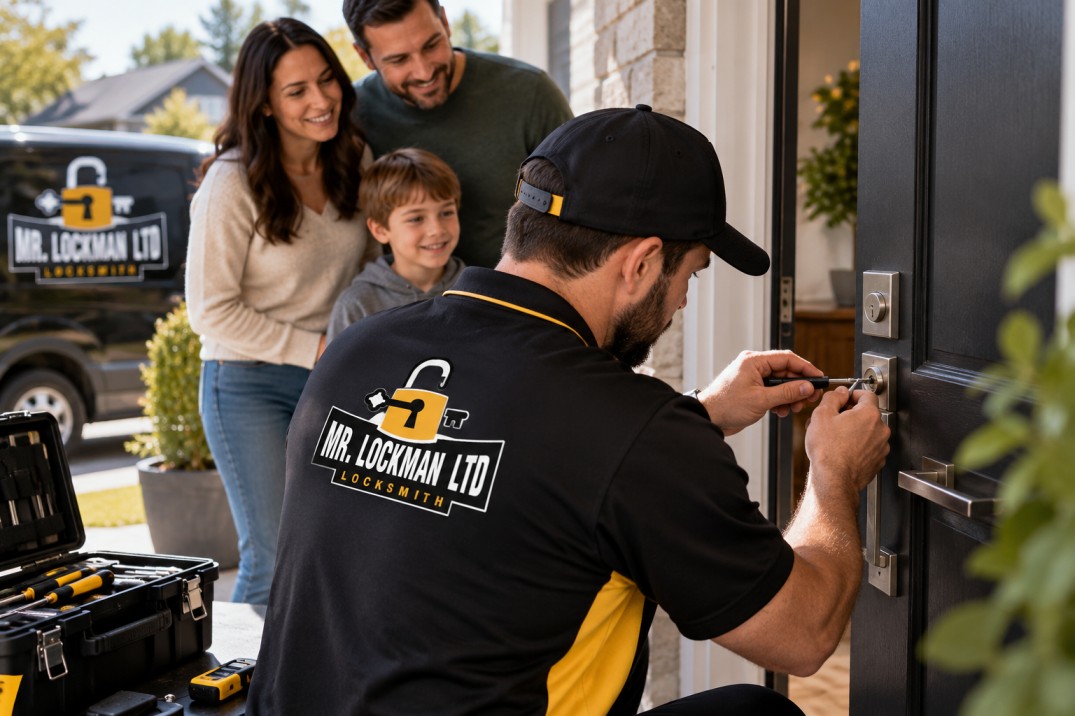
Few things feel worse than turning a key and hearing it fail with a hard snap. You end up with one piece in your grip, and the other part stays in the lock. If this happens at a home door, a workplace, a rental, or another entry, you likely try to get the stuck bit out right away. You might pull at it, twist it, or push the stubborn piece. When you do that, a small issue can turn into a bigger one. The key may come out, but the cylinder can take extra damage in the process.
A snapped key usually does not happen for no reason. It can be worn down, or the lock may feel stiff. Misalignment between parts can also make turning harder. Sometimes someone forces the key past resistance. If you want to fix the problem for good, it helps to know what led to the break, not only to remove the metal. Below is what you should know about broken key extraction in Spruce Grove. It also looks at the risk of trying it yourself and when calling a locksmith is the safer move.
You need broken key removal in Spruce Grove when a key snaps inside a door lock, a deadbolt, or another mechanical locking device. In some cases, the broken tip is easy to see and reach. In other cases, the piece sits far inside the cylinder, and you cannot reach it without proper tools.
Several factors can lead to a snapped key. A key that is older may have tiny cracks or may be weak from years of use. A copied key from a low-quality blank can also wear in a way that does not match the original.
The lock can be the cause too. If the cylinder is stiff, or if the door is pressing in a way that fights the latch, the key may need much more force to turn.
Common causes include:
The important clue is often what happened before the key snapped. If you have been struggling with a key for weeks, pulling out a snapped bit may not fix the real cause. Just removing the piece might leave the same issue behind.
A snapped key is not all the same. Where it sits in the lock core changes what comes next.
If the broken end is sticking out, you may be able to remove it with less trouble. But if the piece broke level with the lock face, or if it sits farther inside, it is harder to handle and needs more care.
Also, do not assume you can solve a stuck key by forcing in another key.
Inside a conventional cylinder are small components that interact with the key cuts. If the cylinder is under tension or the broken fragment is pushed further inside, removing it can become considerably harder.
A professional key extraction involves identifying the position of the broken section and using an appropriate extraction method. The objective is not merely to get the metal out. It is to remove it without unnecessarily damaging the cylinder.
That distinction is important. A few extra minutes of careful extraction can be far cheaper than turning a working lock into a replacement job.
A snapped key is sometimes only the visible symptom of a bigger issue.
Suppose a homeowner has noticed that the front-door key has become increasingly difficult to turn. One evening, the key finally breaks. Removing the fragment may restore access temporarily, but if the cylinder remains stiff, the next key could suffer the same fate.
This is where lock repair becomes relevant.
A locksmith may check the:
A damaged cylinder may require repair, servicing, or replacement depending on what has actually failed.
Good locksmith work is not about automatically replacing hardware. If the existing lock is serviceable, there may be no reason to replace it. On the other hand, repeatedly extracting broken keys from a worn cylinder is not a sensible long-term solution.
Not every broken key requires an urgent callout.
An Emergency Locksmith may be appropriate when:
The locksmith should also establish that you are authorised to access the property before performing work.
There are plenty of household tricks online for removing broken keys. Some situations are simple enough for a careful attempt, but there is a point where continuing becomes counterproductive.
One of the biggest mistakes is pushing another key into the lock. This can drive the broken fragment further into the cylinder.
Using excessive force with tweezers or pliers can also bend or damage the visible section, making it harder to grip.
Superglue is another commonly suggested solution. It can create a much bigger problem if adhesive reaches the cylinder or bonds the broken piece to internal components.
The same principle applies to random lubricants. A product that works for hinges or general mechanical equipment is not automatically suitable for a lock cylinder.
If the fragment is clearly exposed and comes away with minimal effort, that is one situation. If it is deeply lodged, the cylinder is already stiff, or the lock is under tension, stop before turning a simple extraction into a broken lock.
If the lock remains stiff or inconsistent, door lock repair may be necessary. Depending on the fault, this could involve adjustment, servicing, component replacement, or installing a new cylinder.
The replacement key also matters. If the original key was heavily worn, cutting a new copy from it may reproduce the same problem.
When possible, use a good-quality original or appropriate key blank rather than continuing to duplicate a visibly damaged key.
A common assumption is that a broken key automatically means a new lock is required. It doesn’t.
If the cylinder is healthy and the fragment can be removed cleanly, the lock may continue operating normally.
Another misconception is that an old lock is automatically unsafe. Age can contribute to wear, but condition matters more than age alone.
There is also a tendency to blame the key immediately. Sometimes the key is simply the part that finally fails after repeatedly dealing with a stiff or misaligned mechanism.
The better question is: what caused the key to break?
Finding that answer can prevent another failure.
Pay attention to changes in how your locks feel.
If a key that previously turned easily starts requiring extra pressure, don’t ignore it. That change can indicate cylinder wear, dirt, alignment problems, or another mechanical issue.
Replace keys that are visibly bent, cracked, or heavily worn.
Avoid putting unnecessary sideways pressure on a key while it is inserted. Heavy keyrings can also place additional strain on a key when used awkwardly.
For businesses and rental properties, repeated key failures should be treated as a maintenance concern. Fixing the underlying lock problem is usually more sensible than repeatedly replacing keys.
When you hire a locksmith in Alberta, look for proper licensing first. Do not depend only on what an online post says. In Alberta, locksmiths must be licensed, and businesses that work with the public also have to meet those rules.
A broken key is a hassle, but it does not automatically mean the whole locking system is done. The better move is to stop pushing and check whether the fragment can be taken out without harming the cylinder.
Broken key extraction in Spruce Grove can help you get back in. It may also help point to what started the trouble. If you are locked out, or if the property cannot be made secure, an emergency locksmith in Spruce Grove from Mr Lockman may be needed.
Most importantly, don’t treat repeated key failures as bad luck. If the same lock keeps becoming stiff, trapping keys, or damaging duplicates, it deserves a proper inspection. Visit us now!
Often, yes. If the cylinder is otherwise healthy and the broken section can be extracted without damaging internal components, the lock may continue to be used. The condition of the cylinder should be checked after removal.
Only if the broken section is clearly exposed and can be removed without force. If it is deep inside the cylinder or difficult to grip, forcing it can push the fragment further inside or damage the lock.
Urgent help makes sense when the broken key leaves you locked out, prevents a business from operating, or leaves an important entrance unsecured. If there is a suspected break-in or immediate security concern, professional assistance should be arranged promptly.
Yes, depending on the cause and condition of the lock. The cylinder may simply need servicing or adjustment, while a severely worn or damaged component may require replacement.
Keys can develop internal weakness or wear that is not obvious at a glance. A stiff cylinder, door misalignment, or excessive turning force can also contribute. If the lock has been difficult to operate recently, that underlying issue should be investigated.